I am active in several online gardening forums. As the heat peaks in the middle of summer, I always notice a spike in posts featuring pictures of scorched peppers, tomatoes, and cucumbers (although other vegetables can also be affected). Many group members often misdiagnose the problem as blossom end rot, which is a calcium deficiency that results from inconsistent watering that causes the plant not to be able to take up the calcium in the soil. Relatively few garden soils actually lack sufficient calcium in most areas of the country.
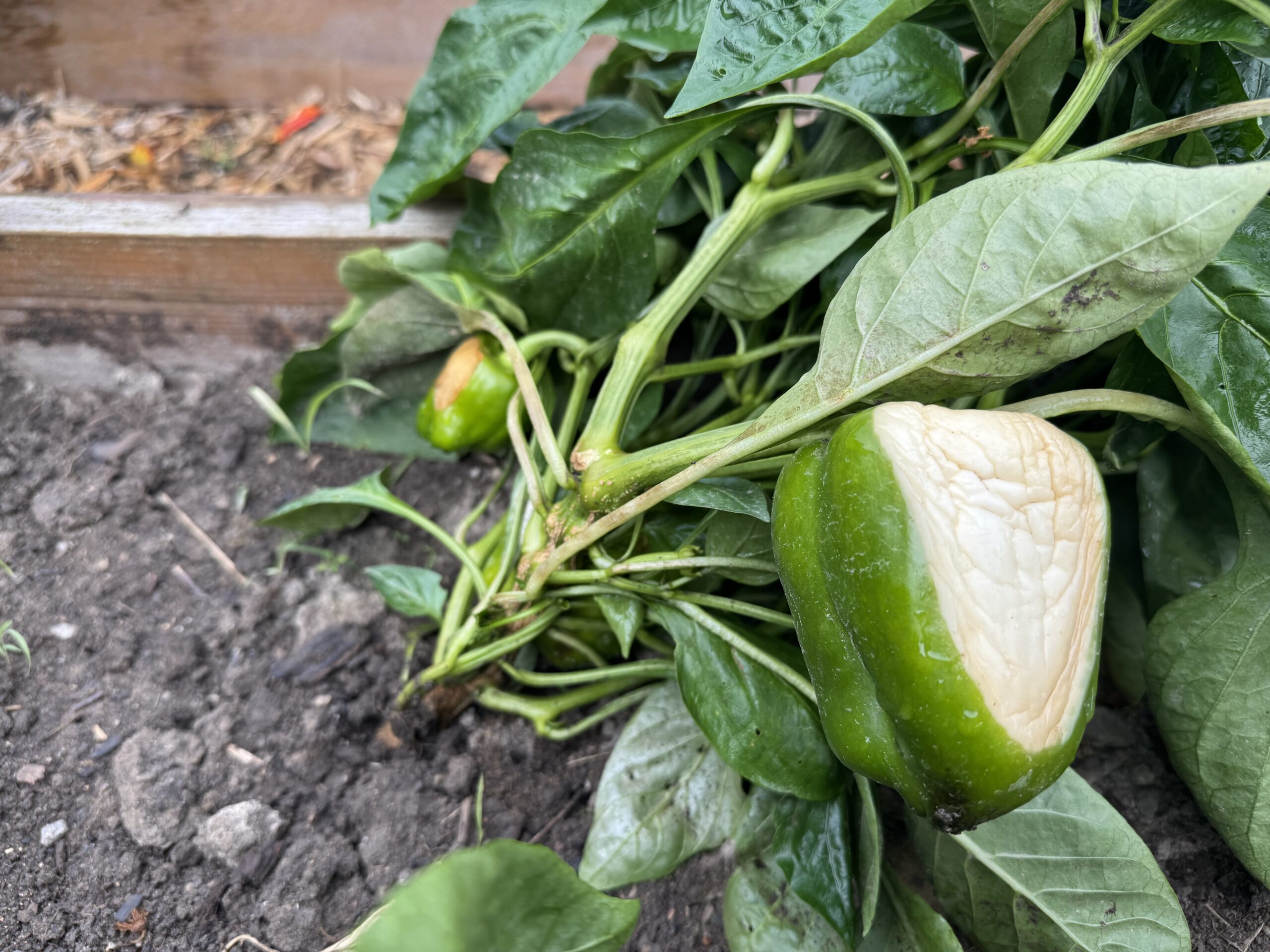
The real culprit is the excessive exposure to intense sun, also known as sunscald.
We are in a catch-22 as gardeners when we grow crops that require full or near-full sun to develop fruits, as the very sunlight we need to produce large, healthy vegetables can also damage plant tissue. The less-developed skin of young fruits cannot tolerate full-sun conditions that a more mature fruit can weather.
There are several courses of action we can take as gardeners to prevent having to throw sunscalded vegetables into the compost:
- Proper fertilization and soil health during early plant growth
- Orientation of the growing area to the sun
- Shade cloth
Proper Fertilization and Soil Health
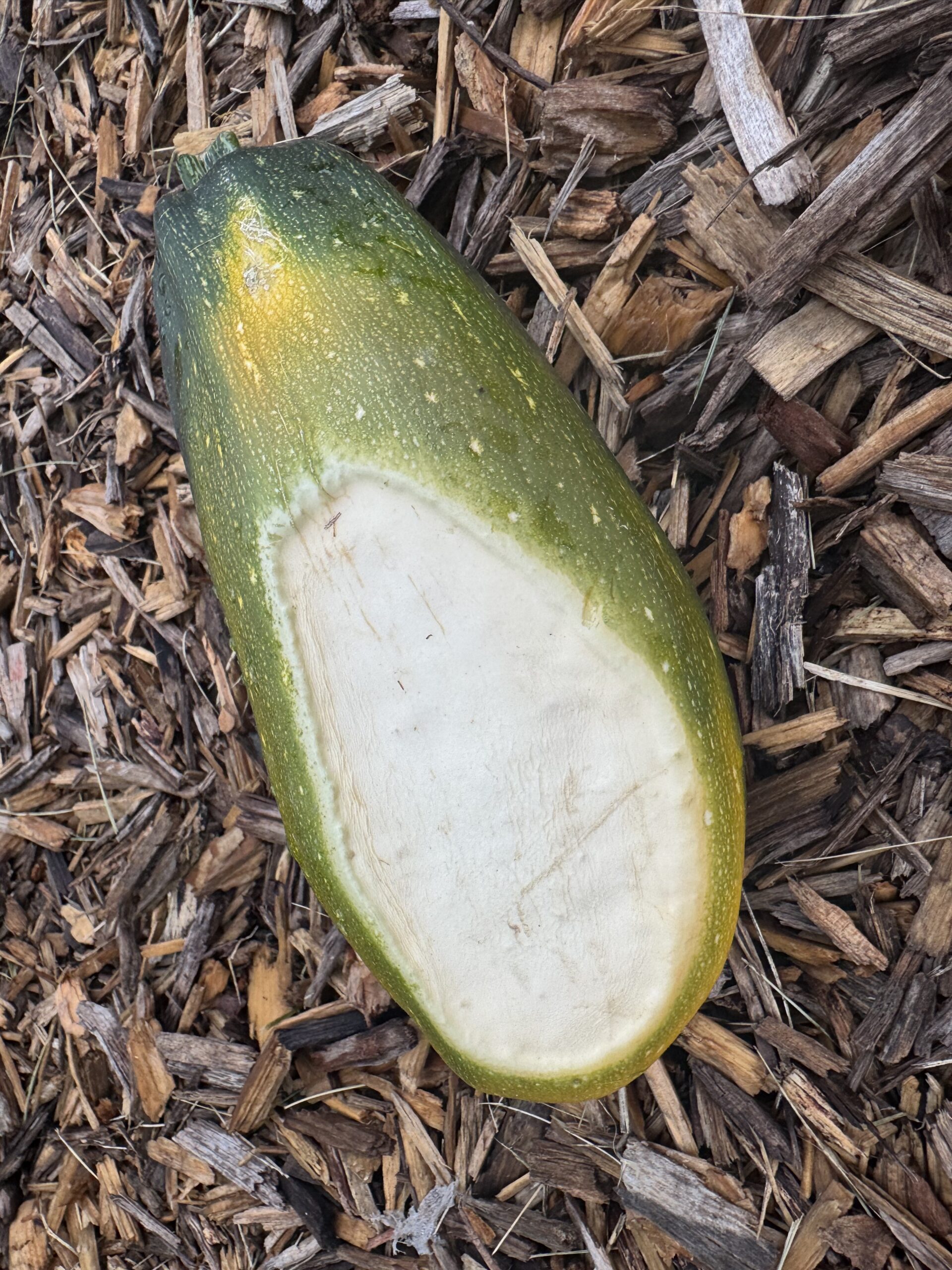
A plant that does not receive the macro and micronutrients it requires will always be more susceptible to damage from environmental forces such as soilborne bacteria and blight, insects, and even stress caused by the sun and wind.
I have always suggested that you “feed the soil, not the plant”. 99% of people with home gardens who just add organic material like finished compost to their beds each year will never have to add specific soil amendments. Healthy soil promotes resilient foliage that can serve its purpose of capturing the sun’s energy to produce glucose to feed the plant as well as partially shading the fruits and soil. This doesn’t mean that you won’t experience sunscald if your plants are healthy, but it decreases the likelihood and severity if it does occur.
Shade Cloth
Shade cloth allows you to create mobile microclimates within your garden. Think of it as moveable mulch—you’re cooling down the soil, which conserves moisture and reduces stress on the plant, while also minimizing the likelihood of sunscald damage on the fruits. With different sizes and occlusion strengths available, you can create the ideal conditions in individual garden beds for specific crops. Shade cloth is the only reason I’m able to grow lettuce throughout the entire growing season in our hot and often dry central Ohio summers, though it is still important to select varieties that are suited for the heat such as loose-leaf romaine, batavia, and buttercrunch types.
The occlusion strength is indicated by a percentage that indicates how much light the cloth allows to pass through. For example, a 40% shade cloth blocks 60% of light and offers a modest amount of protection from solar rays, while a 90% cloth blocks almost all light. The higher percentage cloths are slightly more expensive since they use more material to create tighter weavings. A 40% strength like this one is the best all-around choice for most crops that just need a little help getting through the two or three weeks of peak summer sun in my zone 6a garden.
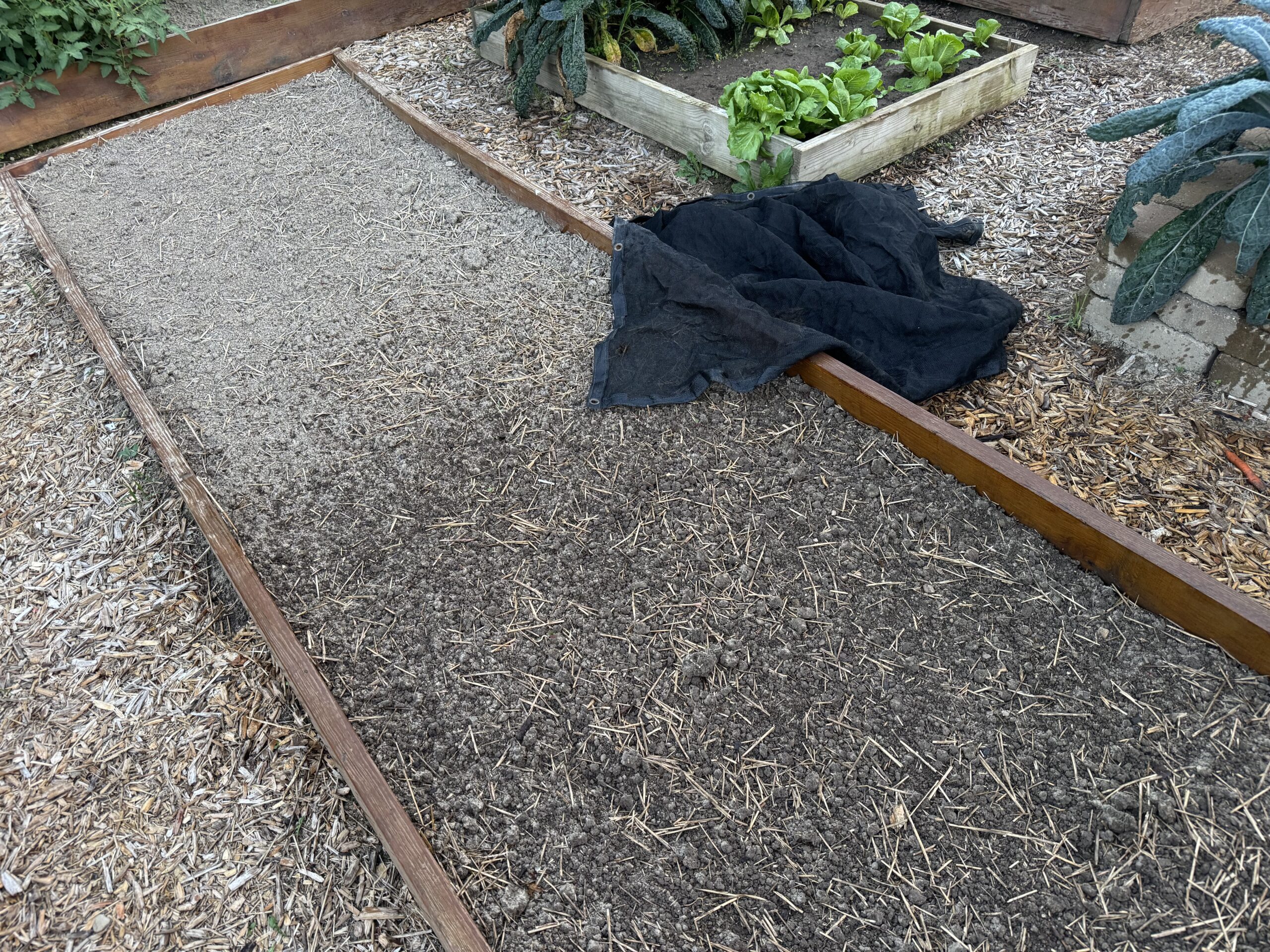
I seldom keep shade cloth over the same bed for more than a couple of days, so I don’t worry about securing it in place. I have found that it stays put when draped over the plants in all but the strongest winds thanks to its weight and ability to let some of the air move through the small spaces in the webbing. There are situations where you might want to keep the same bed shaded for a stretch but don’t want to restrict air circulation or access to the flowers for pollinators. In this case, you can secure the shade cloth to the ground with lightweight tent stakes or landscape staples, which are incredibly helpful to have on hand if you have a garden or even just landscaped beds around your house.
Orientation of the Growing Area to the Sun
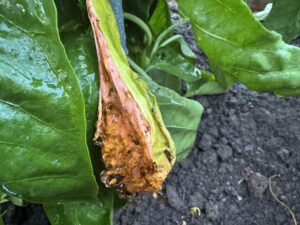
Sunscald is more of a problem in June and July when there is unobstructed mid-day sun, the fruits are immature, and the protective leaf canopy hasn’t grown out enough to shade the fruits. I rarely see it on my mature plants in late August and September when the sun is lower in the sky (even though it’s still quite hot) and the leaves have filled out to protect the fruits. Be cognizant of the sun when you’re considering which beds will be in shade at different times of the day—younger, thicker skinned peppers, especially those at the bottom of the plant that get the strong sun on the south and west side of the plant are the most susceptible to sunscald.
Which Peppers Are Most Affected
First, you may live in an area of the country or have your garden situated in such a way that you will never experience sunscald on your vegetables. If so, count yourself lucky and skip ahead to the part of this article where I provide other uses for shade cloth in the garden.
Peppers with large surface areas (think big blocky bell peppers) that are exposed to the sun and upward-pointing peppers like tabasco are the most vulnerable to sunscald.
Bell peppers are the most popular home grown peppers, but unfortunately they are also the most prone to to solar damage due to their sparse leaf canopy and dense fruit load. I aim for about 14″ between my bell peppers so that the plants can partially shade one another. I once heard another gardener say that “peppers like to hold hands.” This may sound a little close and you might think that it would result in an untamed pepper jungle, but I have found that it’s just right as long as you stake the plants—you can’t get away with this closer spacing if you let the plants fall down on top of one another once they are laden with fruit. This tighter spacing also shades more of the soil, which keeps temperatures down and conserves moisture.
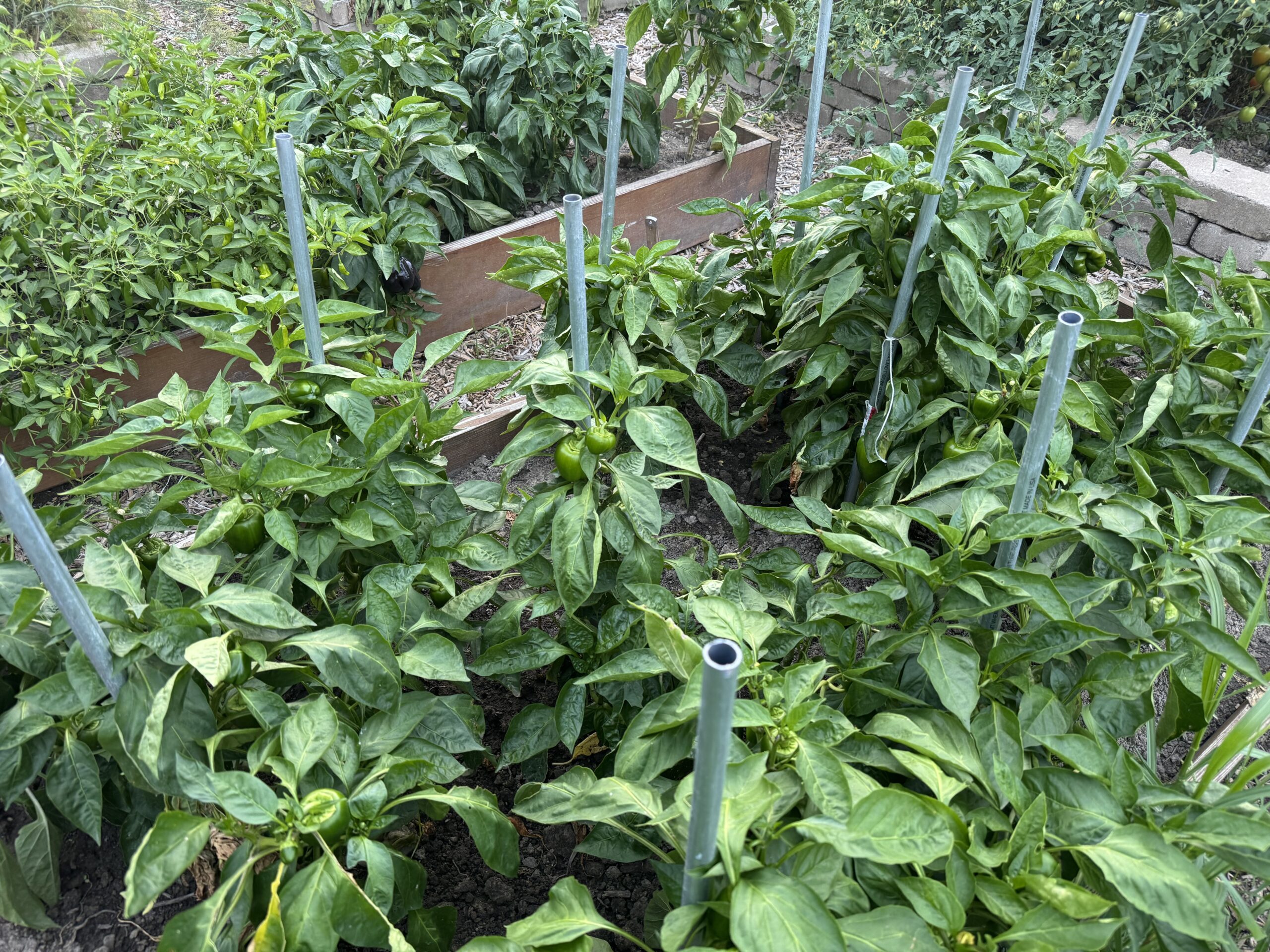
I’ve only had a handful of jalapeño plants suffer sunscald damage, but then again I grow one of the larger varieties—it’s called ‘Megatron’ and is available from Botanical Interests. It’s extra large (consistently 4.5″ long), thick-walled, very flavorful, and even earlier than some other jalapeños, which is surprising given its size. I have been growing this variety for several years and haven’t found a better, more reliable cultivar for making poppers.
Small thin skin peppers such as Thai hot are immune to sunscald that afflicts its larger, blockier cousins, likely because the intense sun is closer to their native tropical and sub-tropical environments. As a side note, that while the U.S. grows them as annuals that die off when winter comes, peppers are short-lived (5 to 7 years) perennial shrubs in areas where they don’t experience these temperatures.
I have never had problems with sunscald on my sport, serrano, cayenne, and frying peppers in my garden. I can leave these uncovered the whole growing season and they will be fine.
Selecting and Caring for Shade Cloth
I was surprised by how many width/length combinations of shade cloth were available online when I first discovered it. I emphasize “online,” as the only store I’ve found it in locally is Harbor Freight. They have a limited selection, but the quality is decent. None of the box stores and, surprisingly, few nurseries in our area stock shade cloth.
I recommend this 6.5′ x 10′ shade cloth for a 4′ x 8′ raised bed, as this size gives you enough extra material on the sides and ends to secure it to the ground if you choose to. This vendor offers 30 different sizes (yes, 30!,) so you’re sure to find one that is just right for your garden. Many home gardeners choose 4′ x 8′ garden beds because they can be built from just three 8-foot boards—two boards used whole for the long sides, and one board cut in half for the short sides—making the project simple, affordable, and low-waste. This sized bed should be the backbone of your garden if your space allows for it. You just can’t beat its efficient use of space, ease of access from all sides, and ability to produce large amounts of produce in only 32 square feet.
Shade cloth is manufactured to withstand strong levels of UV radiation after all, since the product is intended to be used in such conditions. In other words, don’t worry about leaving it in a corner of your garden when you’re not using it.
Fold your cloth up at the end of the season and store it where rodents can’t access it. The material isn’t their first choice for building nests, but they will get resourceful as the winter goes on. If you have to store your shade cloths in a shed or barn where rodents could be present, spray some peppermint oil (the most prominent ingredient in rodent repellent sprays) in and around the container you store your shade cloth in. I have cloths that I have been using for close to a decade that only have very small holes in them from normal wear and tear from moving them and draping them over poles and fences.
Other Uses for Shade Cloth
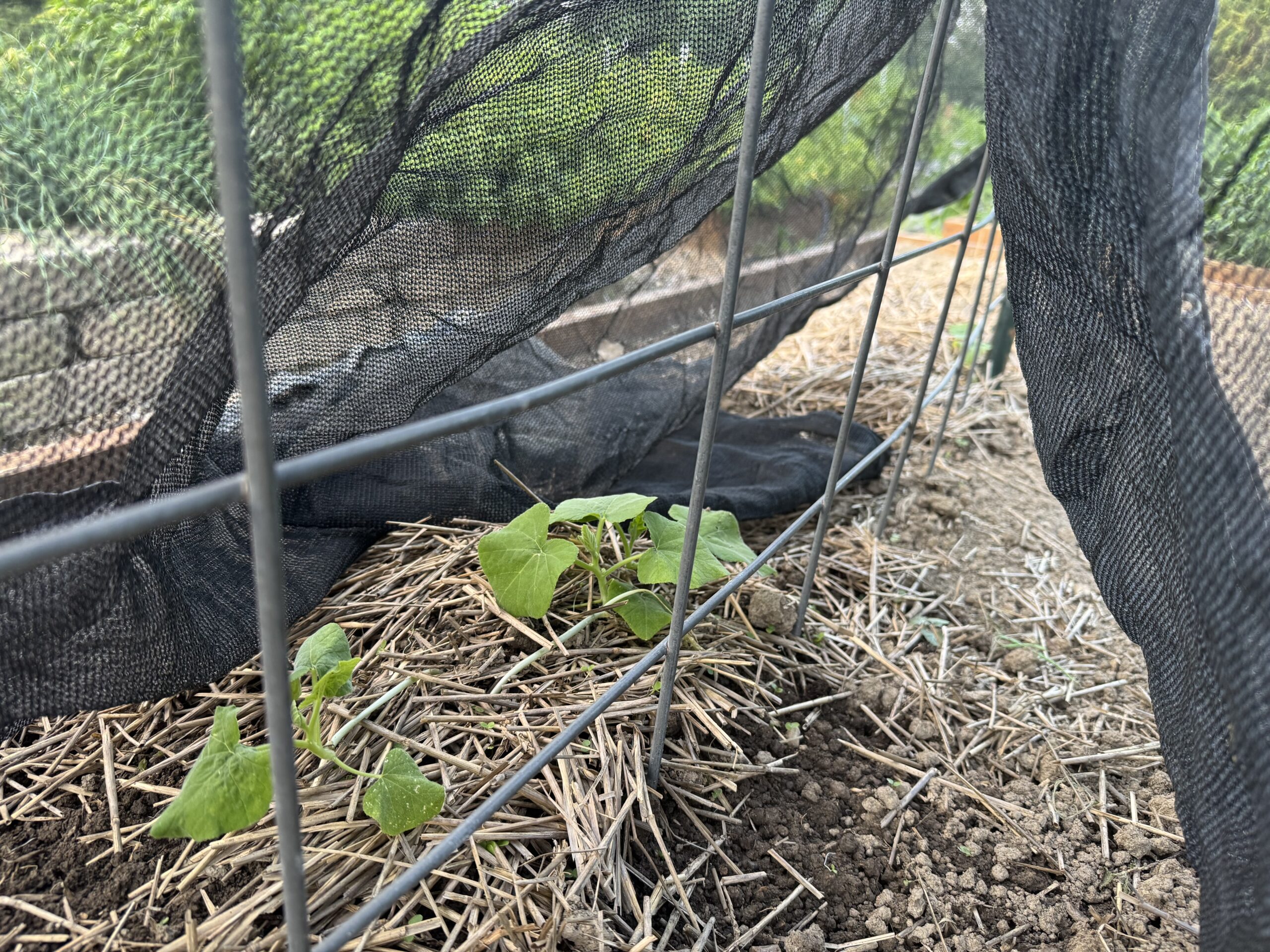
Shade cloth isn’t just for preventing sun scald on fruits and leaves—sometimes it’s about keeping the plant itself alive.
I think of shade cloth as a temporary triage tool that I can use if I have a plant that could make it if only it had a chance to get out of the intense sun for a couple of days. I have draped shade cloth over wilted greens that I fell behind on watering, and the next day they were already looking better. I have even saved transplanted plants that I had to move in conditions that were hotter than I would have liked by watering them in and throwing some shade cloth over them for a couple of days before they recover and acclimate to the new soil.
Growers who use high tunnels (essentially an unheated greenhouse) and want to grow summer crops that could be damaged from too much heat as well as sun remove the plastic from the tunnel and secure shade cloth over the hoops until fall temperatures drop too far.
Shade cloth can also be used to keep the water temperature down and reduce evaporation in a small koi or garden pond by suspending it above the surface using poles. An added benefit is that it makes it harder for hawks, herons, and other birds of prey to see and attack your fish. The same principle applies to keeping chickens and other poultry cooler and protected from aerial predators in their run.
Are you interested in growing carrots, parsley, onions, leeks, celery, and other notorious slow germinators? Like some other small-seeded crops, these all require consistent soil moisture for successful germination. This can be a problem if you aren’t able to water your new sowings enough to keep them from drying out. Some gardeners use a board or a tarp, but shade cloth works here as well and is lighter and easier to store.
I hope you have discovered some ways that shade cloth can cut down on your work and help your garden pull through the hottest weeks so that you can make it to harvest time. My advice would be to start with one 6.5′ x 10′ shade cloth like this and experiment with creating microclimates throughout the seasons.
As always, do the work, help another vet whenever you can, enjoy the fruits of your labor, and have fun along the way. Thanks for being part of the Richwood Gardens community.
If you enjoyed this article or found it helpful, I’d truly appreciate it if you shared it with a friend. Also, if you’re interested in learning about some of the items I have found most useful in my own gardening and cooking, you can check them out on my Product Reviews page. As an Amazon Associate, I earn from qualifying purchases, which helps me keep growing so I can bring you even more valuable content.